
By Gabo
Nan Shepherd, a Scottish modernist writer born in the early 1900s, believed we should approach the mountain, not to conquer it by reaching its summit, but to experience the essence of the mountain’s environment through all of the senses.
Last spring, I found myself wanting that kind of encounter. I was craving a loosening of the emotional grip of city life—rigid schedules, dense routines, constant negotiation. Around that time, Chris from AQ invited me to organize something at Blue House, a place in Yamanashi Prefecture they describe as a creative and restorative space for individuals and teams.
The idea felt immediately right.
Drawn by the promise of winding roads, bird song and time that could stretch, I invited a handful of people who didn't know each other to join me for a few days. All were artists and researchers in their own practices, all curious to test one of their own nascent ideas in a different environment.
The group included:
And myself, Gabo, responsible for most of the meals.
Before arriving, we loosely defined a handful of workshops, prepared supplies, and planned food—trusting that the details would resolve themselves once we were together.
Genie drove us up in her kei van. What should have been a two-hour drive stretched into three and a half. We noticed the city thinning out in gradients: traffic easing, sounds shifting, cicadas gradually overtaking engines.
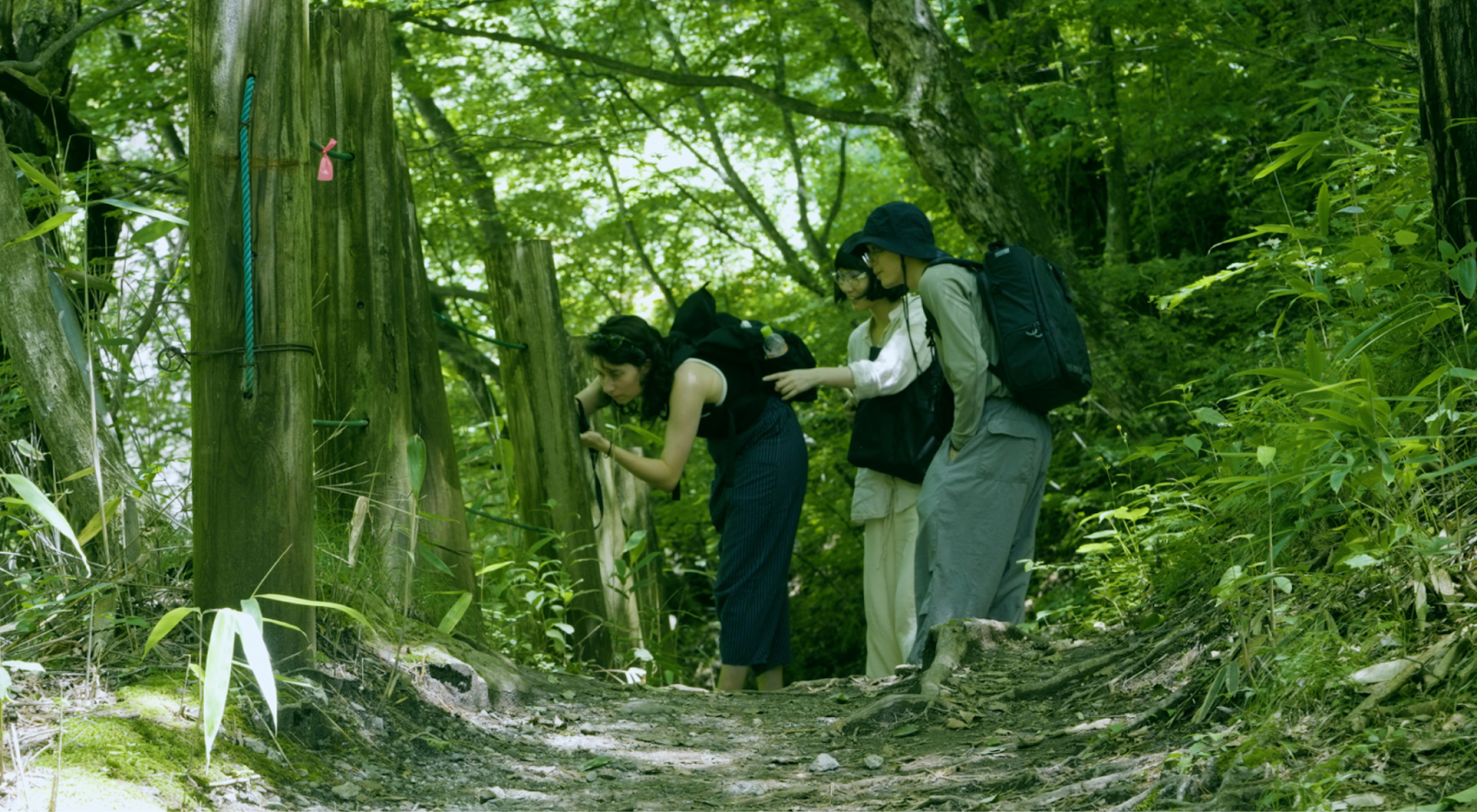
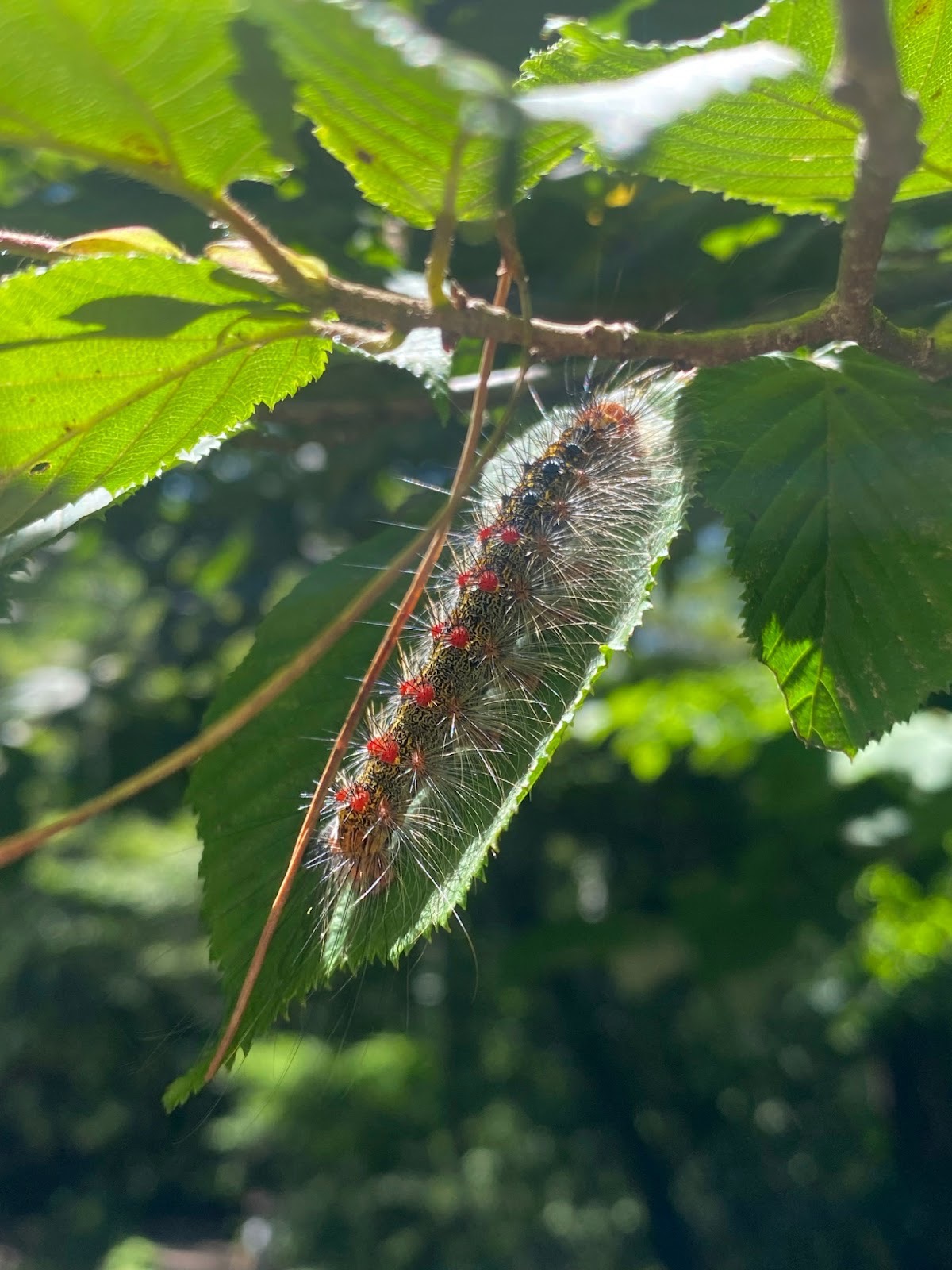
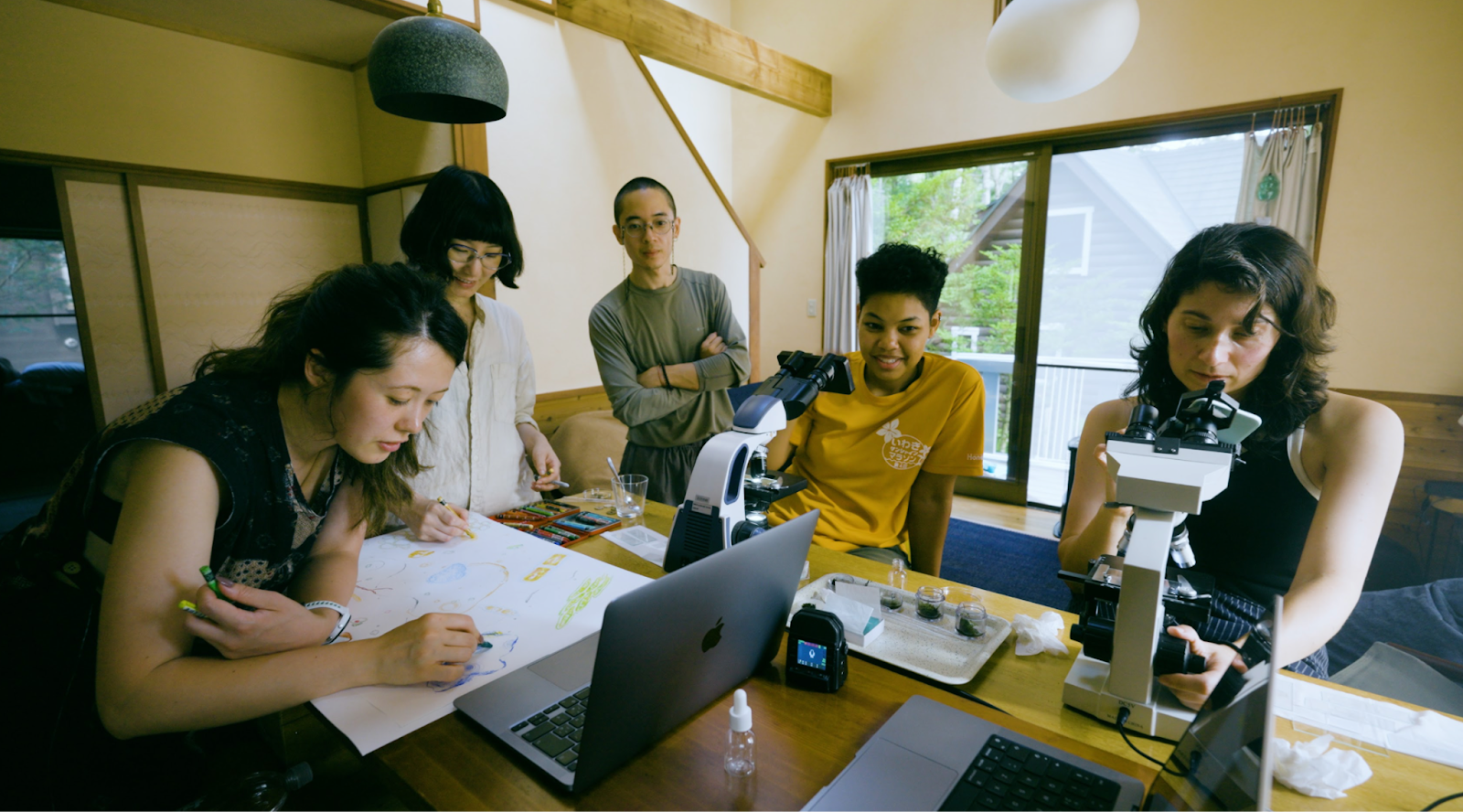
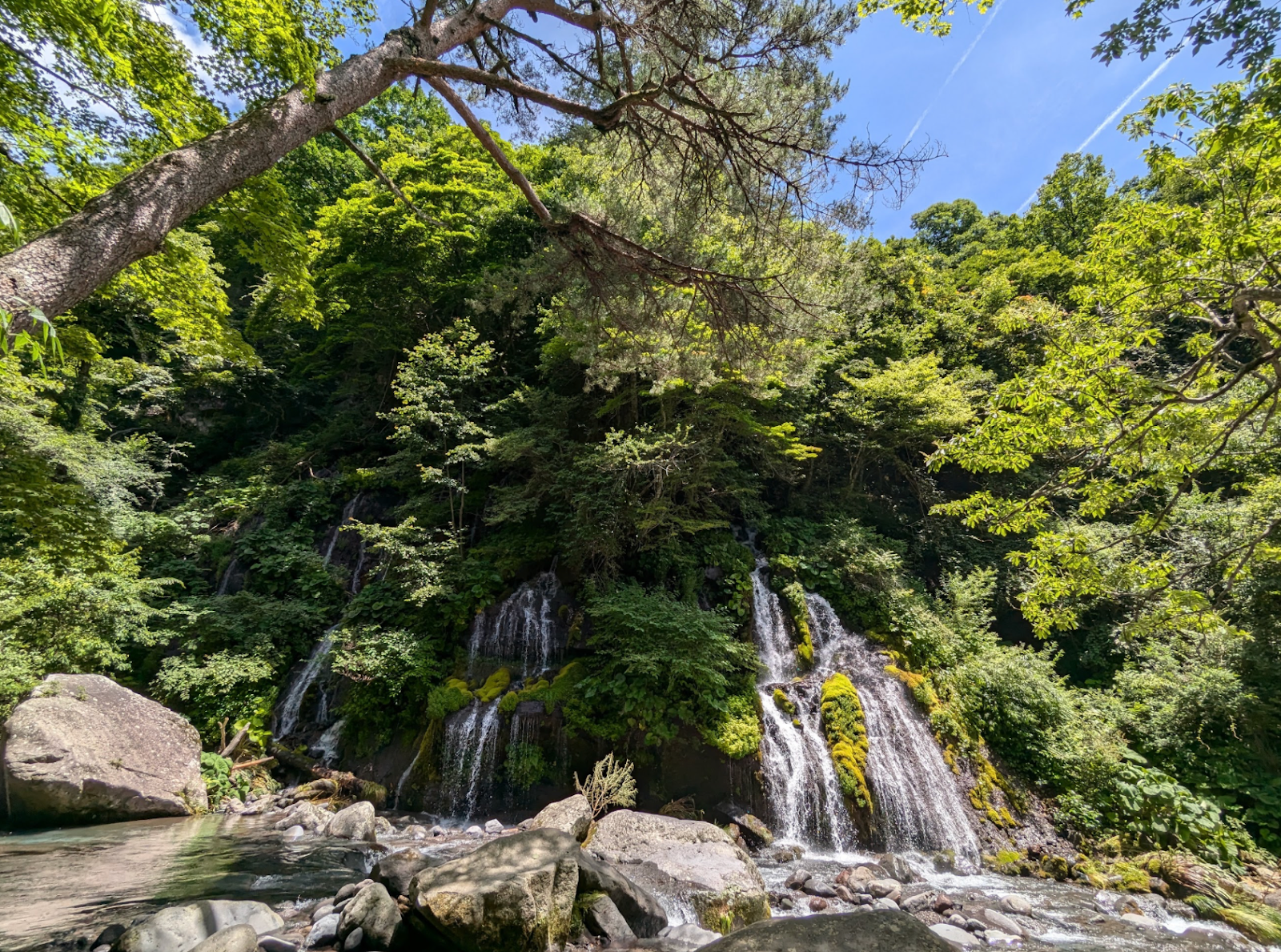
Dominique, a biologist by training and an extraordinary illustrator of natural and imagined creatures, led our first workshop. To ground it in the local ecology, we visited Doryu Falls, just a five-minute drive from Blue House.
September at Doryu Falls presented us with a lush maze of waterfalls and trees. Whenever we encountered a resting point, we sat on rocks and gazed at the water. If we found an interesting pool of water, we collected a few millimeters of water—just enough to carry an entire microscopic world in a small dropper bottle.
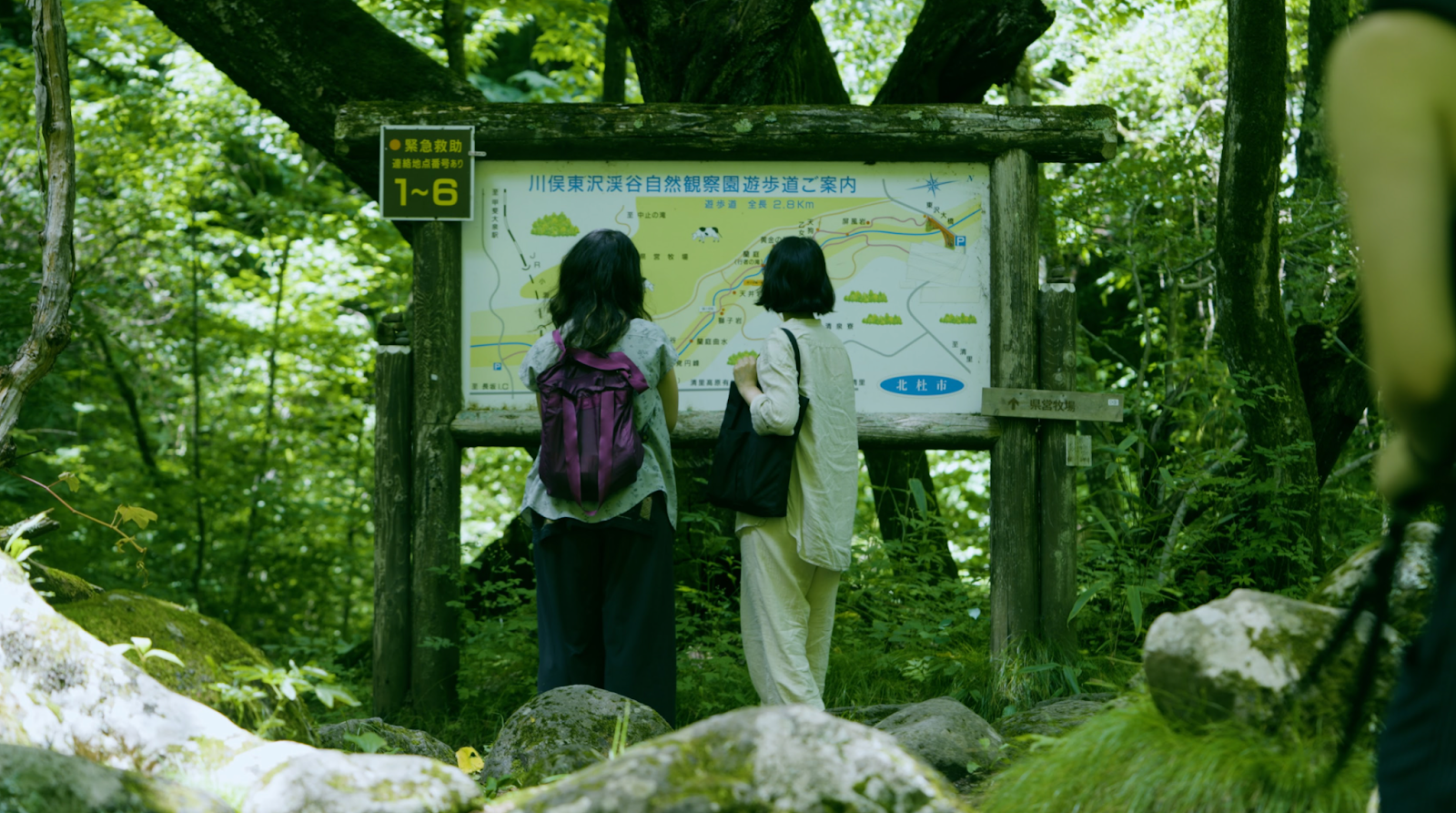
Back at the house, we compared the microscopic environments, collecting moss outside of the house and hydrated them with water in hopes to see a waterbear (tardigrade). The moss was returned after observation.
Dominique prepared slides while we set up microscopes and camera adapters, sketching what we saw as it emerged into view. It was startling to realize how much activity surrounded the house at every moment.
Dominique is preparing samples on slides for observation.
We had managed to spot a tardigrade with our moss samples, and witnessed great battles of organisms from Doryu Falls.
Genie’s practice centers on a deceptively simple pursuit: finding the most expressive line with the least amount of ink. Her workshop began not with pencils or paper, but with a quiet instruction to wander the grounds and return with whatever caught our attention. Fallen twigs, wildflowers, small stones. We arranged our findings on the deck without knowing what would come next.
A layout of found matter around Blue House to be used for Genie’s drawing studies.
What followed was an introduction to her drafting methodology, a process designed to cultivate confident, intentional mark-making. She walked us through how she approaches a subject: observing first, then committing to lines that communicate form without hesitation. Illustrators rarely offer this kind of access to their working process, and I found myself reconsidering habits I had never thought to question. Where I once traced edges tentatively, feeling my way across a shape, I began making deliberate choices about which lines carried meaning and which could be left out.
Away from the city, the forest provided us with an environment where we could share techniques and skills. Just as we would avoid disturbing nature on our hikes, we would extend that sentiment to each other’s offerings.
Wes has studied tea for five years alongside his work as a filmmaker, and he offered to lead a matcha session for the group. We had not anticipated how much the house itself would shape the retreat, but the second-floor tatami room proved to be the ideal setting. Wes had brought his full setup: the iron kettle, the bamboo whisk, the ceramic bowls.
Shoji screens filtered the light. Treetops floated in the window frame. We drank in near-silence.
Wes had brought his dedicated setup to prepare matcha for us.
While we were drinking matcha, we were able to look out onto the treetops surrounding the house. We learned that the second floor had never been used for a workshop before, which made the occasion feel like a small discovery for everyone, including our hosts.
There are many ways to structure a retreat. While Blue House could easily support a more formal, corporate schedule, we chose an informal approach. With only the five of us to care for, we embraced stillness, and when one of us felt inspired to learn, we eased into each of our offerings. If one was in a larger group, perhaps create a loose schedule where generous blocks of time can be assigned.
What mattered most was that each participant arrived with a clear sense of what they wanted to explore. The retreat became a way to prototype and simplify ideas that had already been forming.
Food mattered just as much. Asking about dietary restrictions early saved confusion. Planning scalable, flexible meals made cooking feel communal rather than burdensome. We shopped locally where possible and designed dishes that could evolve into leftovers, supported by fresh, herbaceous side dishes.
Although we arrived as strangers, we left with a deeper understanding of how environment and community shape individual practice, having shared embodied knowledge: how to see through a microscope, how to confidently draw a line, how to enjoy tea.
We left with more tools to create than answers. Nan Shepherd would have approved.
